


The size reduction of materials plays a central role for the development of innovative products. Applications based on nanoparticles can lead to advances in the improvement of properties and functionalities of disperse systems. For fine tuning of their properties and to study the functionality in its natural environment, reliable and efficient technologies and appropriate measuring instruments are required.
The principle of dynamic light scattering (DLS) is used for the characterisation of nanoparticles and is based on the detection of the scattered light intensity of thermally moving particles (Brownian molecular motion).
In the measurement method known as photon correlation spectroscopy (PCS), the autocorrelation of the scattered light intensities is used to determine the particle size distribution. However, this conventional method requires extremely diluted samples to reduce interfering influences such as multiply scattered light on the measurement results and changes the original sample due to the necessary dilution.
By applying an innovative light scattering technique using Photon Cross-Correlation Spectroscopy (PCCS) we are able to provide concurrent measurements of particle size and stability in opaque suspensions and emulsions.
The technologically unique key principle is the detection of two spatially separately generated scattered light intensities, which are then cross-correlated. The single scattered light is thus separated from the multiple scattering. Therefore, the size analysis is independent of the concentration and even possible up to approx. 40 vol.%. The wide concentration range is made possible by combining PCS and PCCS in one instrument.

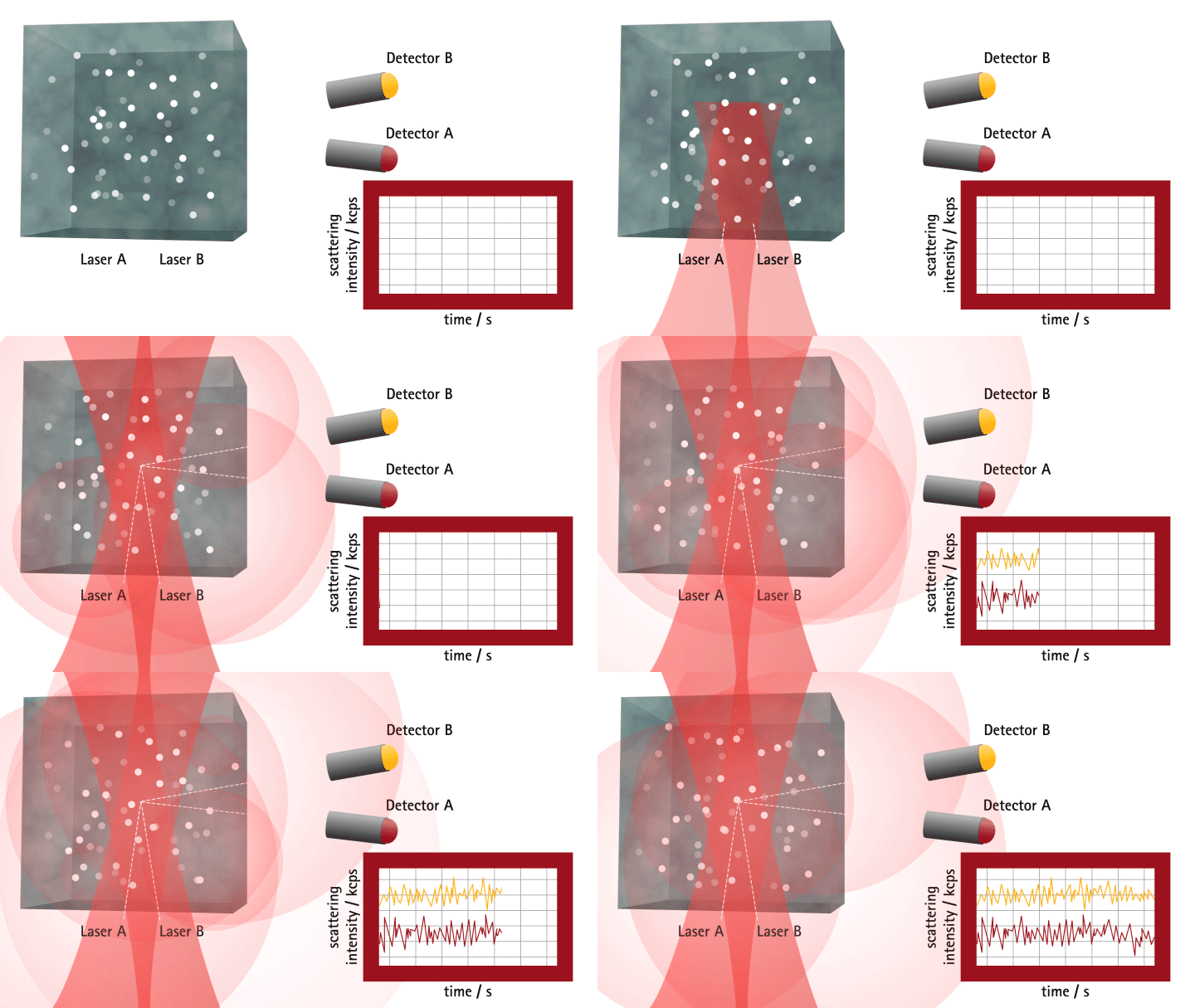
With the patent-pending innovation of polarisation-separated backscatter PCCS, the NANOPHOX CS revolutionises the proven light scattering technique of PCCS and raises the signal quality to an even higher level.
The measuring principle is based on two separate laser beams polarised perpendicular to each other, which are directed into the measuring zone and returned parallel through the cuvette via the optics by a backscatter of 176°. By separating the light of the p- and s-polarised laser beams via polarisation filters, a high signal-to-noise ratio is realised. As a result, the technology reliably achieves reproducible measurement results at higher sample concentrations and shorter measurement times with improved accuracy.
Dynamic light scattering sensor
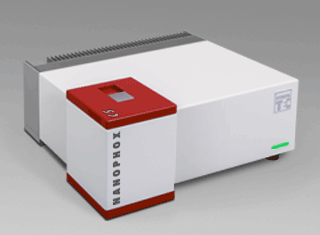
NANOPHOX | Particle size analysis and stability of nano suspensions in laboratory
NANOPHOX CS opens up the analysis of the size of nanoparticles with photon cross correlation spectroscopy (PCCS) in turbid suspensions and emulsions in a size range from 0.5 nm to 10,000 nm at up to a hundred times higher solid contents than with conventional DLS instruments. The size analysis is independent of the concentration. Typical applications are e.g., pharmaceutical emulsions, oxides, paints, lacquers and inks as well as the research of nanomaterials in general.